
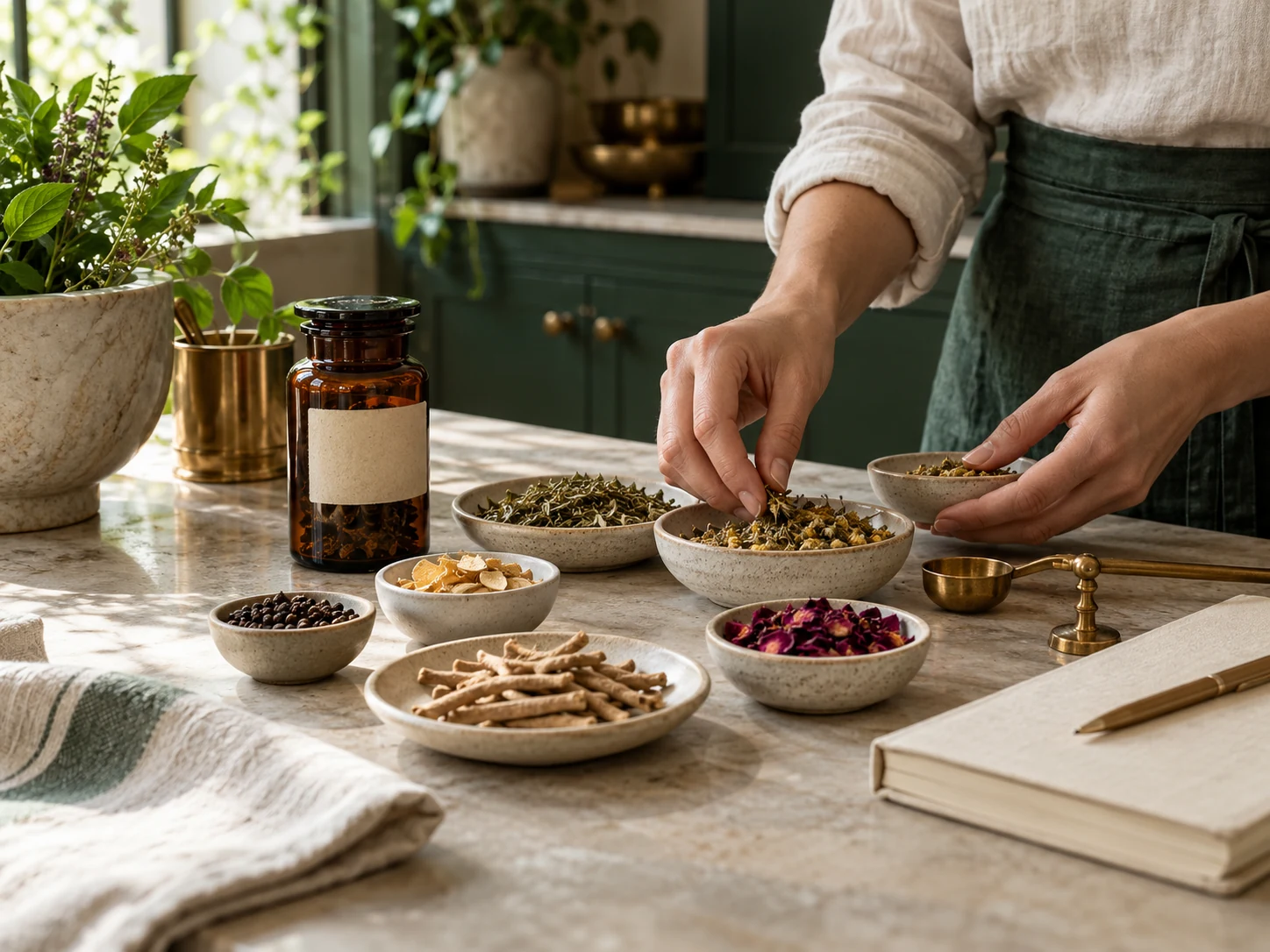
Illustrative artwork for education and context.
Individual guidance, rooted in classical Ayurveda
Vaidya Kamal Bambhania, B.A.M.S, M.D. Ayurveda, offers Ayurvedic formulation consultations in San Marcos and remotely by arrangement. Practicing Ayurveda since 1983, he brings expertise in Rasayana Shastra and decades of experience supporting people with chronic health concerns. The service combines individual assessment, an explanation of the proposed formulation and a discussion of suitability, ingredients and follow-up.
The Ayurvedic framework
Ayurveda may consider prakriti (constitution), vikriti (current pattern), the doshas, and agni (digestive fire) when discussing a traditional formulation. These concepts provide a language for individualized choices. They are not medical tests, and a dosha profile alone cannot establish that a particular herb or product is safe or effective for you.
1. Begin with a personal assessment
Vaidya Kamal asks about the reason for your visit, daily routine, food, sleep, relevant medical conditions, allergies, and the medicines and supplements you use. Bring product names or labels when possible. The conversation also makes room for cultural preferences, past experiences, and questions. A formulation should be considered only after its actual ingredients and your circumstances are understood.
2. Understand the options
An option might involve a traditional botanical preparation, a dietary supplement, or simply a change to food and routine. Different preparations can have different ingredients, concentrations, directions, and intended uses within Ayurveda. An example from a classical text is not automatically a product offered by this practice. You can ask what is available, why it is being discussed, what evidence exists for a claim, and what alternatives you have.
3. Check quality and suitability
If a product is considered, look at its full label: ingredients, amount per serving, manufacturer, lot information, directions, and cautions. Ask about sourcing and any available quality testing for identity and contaminants. “Natural” does not guarantee safety, and traditional use does not prove a modern clinical benefit. Some Ayurvedic preparations have been found to contain potentially harmful amounts of heavy metals; quality questions deserve direct answers about the specific product.
4. Review interactions and follow-up
Herbs and supplements can cause side effects or interact with prescription or over-the-counter medicines. Pregnancy, nursing, surgery, chronic illness, and care for a child may change the risk. Involve your physician or pharmacist before starting a new product, and tell them exactly what you take. If you try an option, discuss how to use it, what to watch for, and when to stop and seek medical advice. Never change a prescribed treatment on the basis of this service.
What your consultation includes
Bring the concern you want to discuss, whether it relates to digestion, persistent pain, women’s health, immune-related questions or another longstanding condition. Vaidya Kamal considers your history, current medicines and Ayurvedic assessment before explaining any proposed formulation, food guidance or daily practices. You can ask about ingredients, intended purpose, cost and how your experience will be reviewed. Formulations are optional and charged separately; a consultation does not guarantee that a particular product will be appropriate.
Ask a question or arrange a consultation
Begin with a complimentary 15-minute phone or video introduction to ask about the service, or book a 90-minute initial Ayurveda consultation at $325 for individual assessment and recommendations. Compare appointment options or send a question or request a callback. In-person consultations take place in San Marcos, serving San Diego County; remote consultations are available by arrangement. Formulations and therapies have separate fees, discussed before you agree.
Further reading
The National Center for Complementary and Integrative Health discusses Ayurvedic products and safety. The FDA’s dietary supplement overview explains how supplements are regulated in the United States.
Classical Ayurvedic formulation consultations provide individualized guidance. It does not diagnose or treat disease and does not replace advice from a licensed medical professional.