
Ayurveda in the classroom
An introduction to traditional knowledge through the lens of culture, daily life, and the human body.
From lived practice to shared learning.
Vaidya Kamal Bambhania has guest lectured on Ayurveda and Hindu cultural medicine for medical anthropology students at California State University San Marcos since 2020.
His lectures introduce the language and frameworks of Ayurveda, inviting students to consider how this tradition understands the individual and their relationship to the world around them.
Six foundations of Ayurveda.
Select a topic to explore an accessible summary of the ideas introduced in Vaidya Kamal’s classroom lectures.
01Understanding AyurvedaOrigins and whole-person perspective
Ayurveda is a traditional system of knowledge from India. Its name combines Sanskrit terms for life (ayus) and knowledge (veda). The lecture introduces its view of wellbeing through the relationship among body, mind, daily habits, and environment.
Students explore how Ayurvedic ideas about food, rest, and routine fit within a larger cultural and historical tradition.
02The three doshasVata · Pitta · Kapha
Doshas are three organizing concepts in Ayurveda. Vata is associated with movement, pitta with transformation, and kapha with structure and stability. Each is described through characteristic qualities and connections to the five elements.
The lecture considers how Ayurveda uses their relative balance to describe differences among individuals and changing patterns over time.
03Five great elementsPanchamahabhutas
Space (or ether), air, fire, water, and earth are the five great elements in Ayurvedic philosophy. They are conceptual qualities used to describe the world and the human body, rather than literal ingredients measured in the body.
The topic shows how these ideas connect to the doshas, the senses, and Ayurveda’s vocabulary for everyday experience.
04Six tastesSweet · Sour · Salty · Pungent · Bitter · Astringent
Ayurveda groups foods by six tastes, known as rasas. Each taste is discussed in relation to the five elements and the three doshas.
In the classroom, this framework offers a way to examine how food is described in the tradition and why variety and context matter in Ayurvedic dietary thinking.
05Body profile and constitutionPrakriti and vikriti
Prakriti refers to an individual’s underlying constitution in Ayurveda; vikriti describes a current state or pattern. This is sometimes called “body profiling” and discusses physical, mental, and emotional characteristics.
The lecture introduces how these concepts inform individualized conversations about daily routine, food, and lifestyle within Ayurvedic practice.
06Herbs in AyurvedaTraditional botanicals and formulations
The lecture uses ashwagandha, turmeric, and triphala as examples. Triphala is a traditional combination of three fruits: amla, haritaki, and bibhitaki.
This topic introduces how herbs and formulations appear in Ayurvedic texts and practice. Their traditional uses are discussed as cultural and educational context, without treating them as a substitute for medical care.
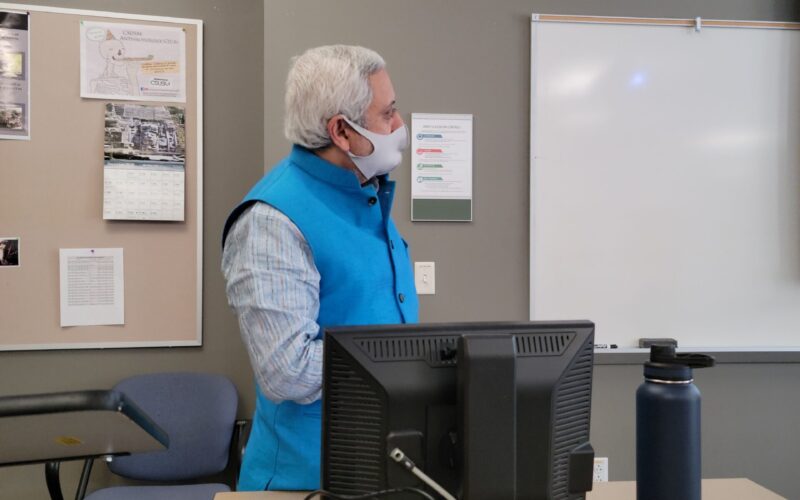
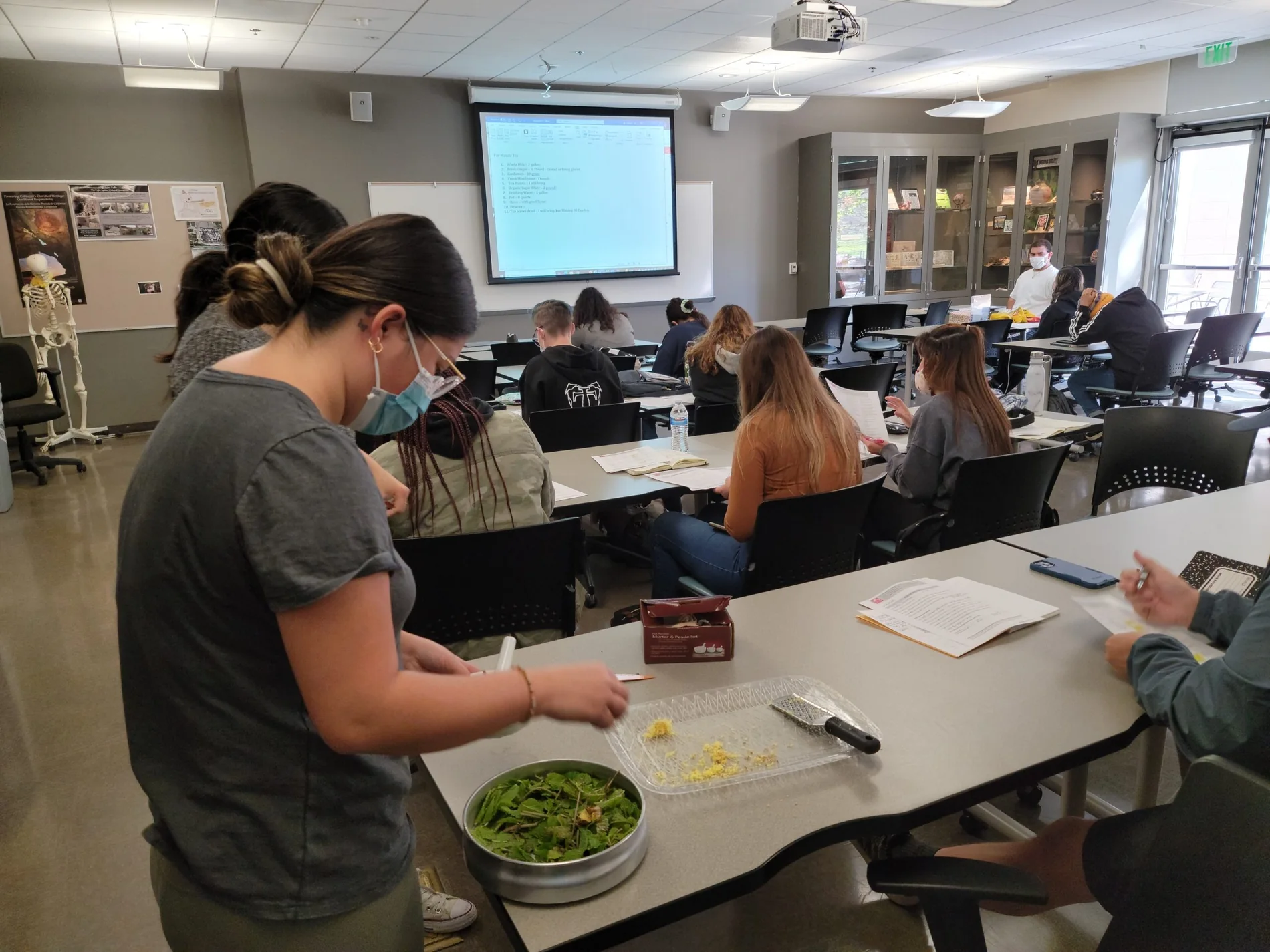
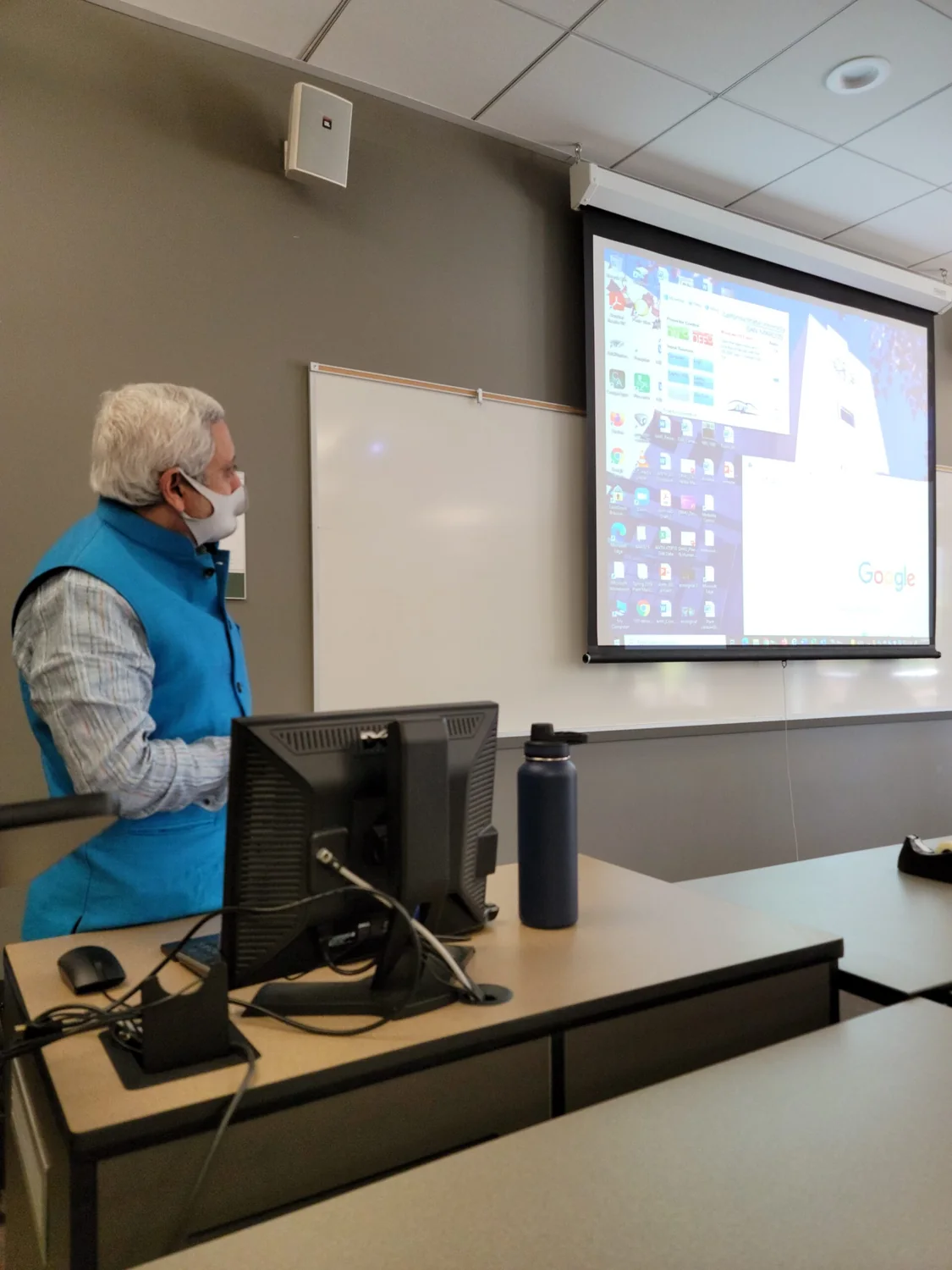
Moments from a lecture.
Photographs from Vaidya Kamal’s medical anthropology classroom visit at California State University San Marcos.

Learning beyond the lecture.
Explore the foundations in more depth, or see how these traditional ideas inform the practice’s individual conversations and services.